
Ghewar — Rajasthan’s Monsoon Sweet: History, Recipe, Tips & Best Places in Jaipur
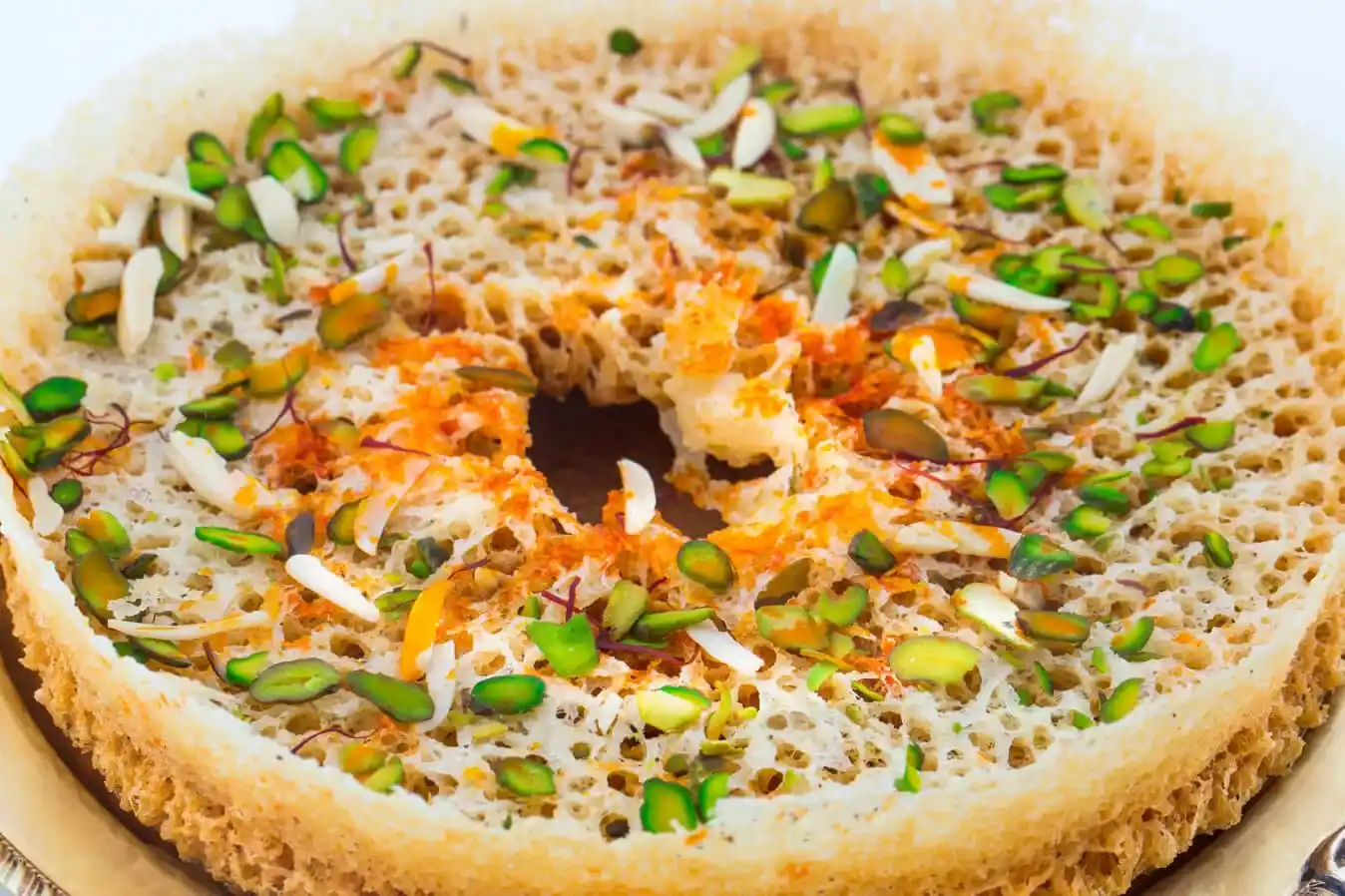
Ghewar is the crisp, honeycomb-textured sweet that announces monsoon and festival time in Rajasthan. Thin, lacy discs soaked with syrup or topped with rabri, ghewar is celebratory — made for sharing and gifting. This long-form guide explores ghewar’s history, the tricky technique simplified for home cooks, ingredient choices, Jaipur sweet shops to try, helpful tips, and a detailed FAQ. Written in easy English with a light Hindi flavour so everyone can follow.
Note: Ghewar needs patience and practice — but with the right technique it’s doable at home. Use fresh ghee and a steady hand.
Where Ghewar Came From — A Short History
Ghewar traces its roots to royal kitchens and festive traditions. It became popular in Rajasthan and neighbouring regions for monsoon festivals like Teej and Raksha Bandhan. Skilled cooks in palace kitchens developed the pouring and frying technique that creates ghewar’s characteristic porous, honeycomb-like structure. Over time ghewar moved from royal treat to street-side sweet and home-made festival dessert.
The sweet’s texture is its magic: crisp outside, airy inside, and able to hold syrup or thick rabri. That contrast — crisp lattice plus soft topping — is the reason ghewar remains beloved.
Why Ghewar Is a Monsoon Sweet
The monsoon’s humidity helps the batter form stable holes while frying, giving ghewar its unique texture. In very dry weather the batter can crack or fail to form layers. That’s why many cooks reserve ghewar for the monsoon season when the conditions are friendlier for the technique.
Ingredients — The Simple List That Matters
➡ Batter
Ingredients: Maida (refined flour), ghee, milk (or water), a pinch of baking powder (optional for lightness).
Why it matters: Thin batter plus hot ghee are the combo that creates ghewar’s porous texture.
➡ Syrup & Topping
Ingredients: Sugar syrup (1:1 or 1:2), rabri/mawa (optional), chopped pistachios/almonds, cardamom, edible silver (varq) for presentation.
Why it matters: Syrup sweetens the lattice, while rabri adds creaminess and richness for festive serving.
Equipment & Safety Tips
- Deep, heavy-bottomed kadai or wok: Maintains even heat and reduces splatter.
- Long-handled ladle or pouring tool: For controlled pouring of batter.
- Thermometer (optional): Keep ghee around 170–180°C for frying.
- Safety first: Hot ghee can splash. Keep children away, use long sleeves and a stable surface.
How to Make Ghewar — A Practical, Step-by-Step Guide
This method is a simplified version of the traditional technique, tuned for home kitchens. Practice once or twice and the motion becomes natural.
The Batter
Ingredients: 1 cup maida, 1–1.25 cups milk (or water for thinner batter), 2 tbsp ghee (melted), a pinch of salt, 1/4 tsp baking powder (optional).
- Sieve maida into a bowl. Add a pinch of salt and baking powder if using.
- Slowly add milk while whisking to make a smooth, very thin batter — almost like heavy cream. Batter should be pourable from height in a thin stream.
- Add 1–2 tbsp melted ghee and whisk again. Rest the batter for 10–15 minutes.
Frying the Ghewar
Method 1 — Traditional pouring (best texture):
- Heat ghee in a deep kadai until hot (about 170–180°C). Test by dropping a tiny drop of batter — it should sizzle and rise slowly.
- Fill a ladle with batter. From about 20–30 cm height, pour a thin stream into hot ghee in circular motion, starting from centre outward, then back toward centre to create layers. Keep repeating until the disc forms (2–3 layers).
- Fry on medium heat until light golden. Remove and drain on kitchen paper.
Method 2 — Funnel or bottle (easier for home): Use a squeeze bottle or funnel with a thin spout to pour batter in circles. Practise steady motion; speed controls the hole size.
Syrup & Topping
- Prepare light sugar syrup (1:1 sugar:water) — bring to single-string consistency. Add cardamom powder.
- Dip warm ghewar partially in syrup or brush syrup lightly so it absorbs but remains crisp. Alternatively top with chilled rabri (thickened sweet milk) for a royal touch.
- Garnish with chopped pistachios, almonds and a little silver varq for presentation.
Serve immediately for best texture. If using rabri, add slightly before serving to avoid sogginess.
Variations & Practical Tips
- Plain Ghewar: No toppings — enjoy crisp texture with light syrup.
- Mawa Ghewar: Topped with thick rabri or mawa and dry fruits — richer and festive.
- Chocolate or flavoured: Modern shops offer variants with chocolate, kesar, or fruit-flavoured syrups.
- Temperature control: Keep ghee hot but not smoking; too hot will brown ghewar quickly without cooking texture properly.
- Batter thinness: If holes don’t form, batter is too thick — thin it slightly with milk/water.
- Practice makes perfect: The pouring motion improves with repetition — start with small ghewar to build confidence.
Best Places to Buy Ghewar in Jaipur
Jaipur’s sweet shops and bakery counters shine in monsoon season. Here are places to check:
Laxmi Mishtan Bhandar (LMB)
Reliable, classic ghewar and festive boxes.
Rawat or local mithaiwalas
Fresh, often made-to-order ghewar preferred by locals.
Speciality sweet shops
Look for shops advertising seasonal ghewar — they often make larger batches and varieties.
Tip: Fresh ghewar (made the same day) is the best. If buying, consume within 1–2 days for crispness — rabri-topped versions should be eaten same day.
FAQs — Ghewar
Is ghewar vegetarian?
Yes — made from flour, milk and ghee; typically fully vegetarian. Some modern versions may use cream or chocolate toppings but the base is vegetarian.
Why does ghewar sometimes turn soggy?
Ghewar becomes soggy if syrup or rabri is applied too early or too much. Apply lightly and serve quickly for the best texture.
Can I make ghewar without ghee?
Ghee is essential for authentic flavour and frying properties. Using vegetable oil will change texture and taste; for best results use fresh ghee.
How long does ghewar last?
Plain, dry ghewar stays crisp for 3–4 days if stored airtight. Syrup-soaked or rabri-topped ghewar should be eaten the same day or refrigerated and consumed within 24 hours.
Is there an easier beginner method?
Yes — use a squeeze bottle or batter funnel to pour batter steadily. Make small ghewar first to build confidence before attempting large discs.